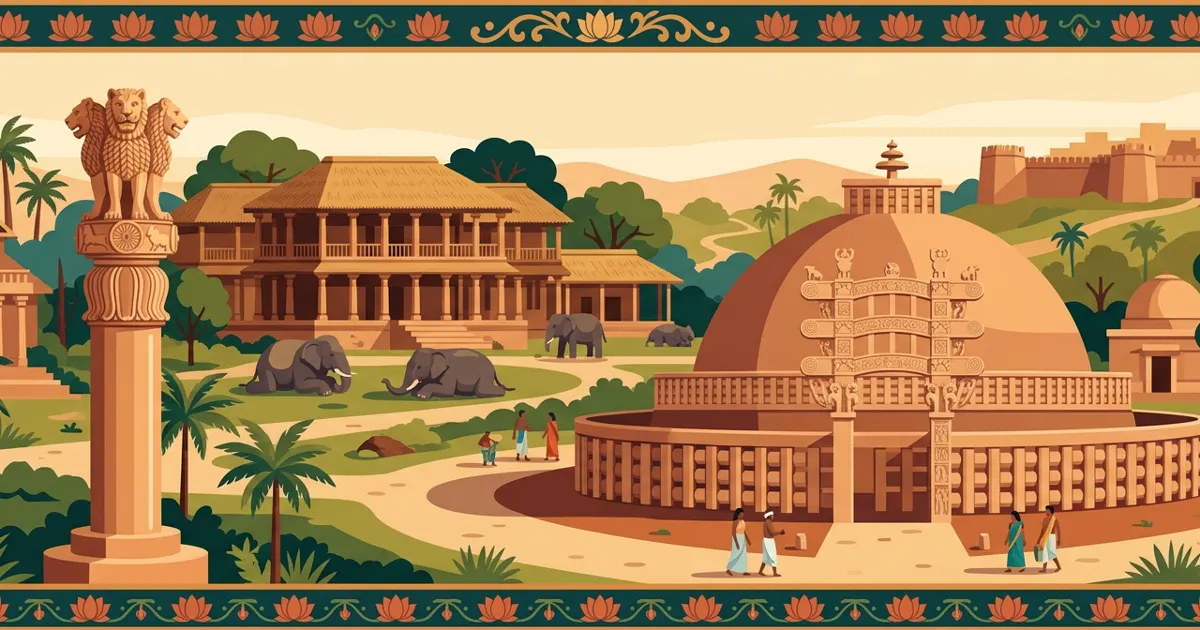
Mauryan Empire Rulers: Quick Answer
The Mauryan empire (c. 322-185 BCE) was founded by Chandragupta Maurya, who overthrew the Nanda king Dhana Nanda with the help of Chanakya (Kautilya). He was followed by his son Bindusara and grandson Ashoka, the greatest Mauryan ruler, who fought the Kalinga war (c. 261 BCE) and then spread Buddhism and Dhamma. The last ruler, Brihadratha, was killed by his general Pushyamitra Shunga around 185 BCE. The capital was Pataliputra.
Key takeaway: One tag per ruler wins most SSC questions: Chandragupta = Chanakya + Seleucus + Megasthenes + Jain end at Shravanabelagola, Bindusara = Amitraghata + Ajivika, Ashoka = Kalinga war (Rock Edict XIII) + Third Buddhist Council + Sarnath Lion Capital. Add James Prinsep (1837) as the man who read Ashoka's Brahmi edicts.
Mauryan Empire Rulers List in Chronological Order
| Ruler | Approx. reign (BCE) | Title / known as | Most asked facts |
|---|---|---|---|
| Chandragupta Maurya | c. 322-298 | Sandrocottus (Greek writers) | Founder; defeated Dhana Nanda with Chanakya; defeated Seleucus Nicator (c. 305 BCE); Greek envoy Megasthenes at his court; became a Jain and died at Shravanabelagola (Karnataka) with Bhadrabahu |
| Bindusara | c. 298-273 | Amitraghata ("slayer of foes"; Greek: Amitrochates) | Followed the Ajivika sect; Syrian envoy Deimachus came from Antiochus I; extended the empire to the Deccan |
| Ashoka | c. 268-232 (accession c. 273) | Devanampiya Piyadasi ("beloved of the gods") | Kalinga war in the 8th year of his coronation; adopted Buddhism; Third Buddhist Council at Pataliputra; sent son Mahendra and daughter Sanghamitra to Sri Lanka |
| Dasharatha | c. 232-224 | — | Donated the Nagarjuni hill caves to the Ajivikas |
| Samprati | c. 224-215 | — | Patron of Jainism (Jain tradition) |
| Shalishuka, Devavarman, Shatadhanvan | c. 215-195 | — | Weak rulers; empire shrank |
| Brihadratha | c. 195-185 | — | Last Mauryan ruler; killed by his commander Pushyamitra Shunga, who founded the Shunga dynasty |
Order trick: "Chanakya Brought Ashoka Dharma" → Chandragupta, Bindusara, Ashoka, Dasharatha.
Chandragupta Maurya and Chanakya: Facts for SSC
- Chanakya, also called Kautilya or Vishnugupta, wrote the Arthashastra, a treatise on statecraft, economy and administration.
- After defeating Seleucus Nicator (Alexander's general), Chandragupta received the areas of Arachosia (Kandahar), Gedrosia, Paropamisadae and Aria, gave 500 elephants, and a marriage alliance was made.
- Megasthenes, Seleucus's ambassador, lived at Pataliputra and wrote Indica. He described Indian society as having seven classes and Pataliputra as run by six committees of five members each.
- His governor Pushyagupta built the Sudarshana lake in Saurashtra (recorded later in Rudradaman's Junagadh inscription).
- Jain tradition says he gave up the throne, went south with the monk Bhadrabahu and fasted to death (sallekhana) at Shravanabelagola.
- The play Mudrarakshasa by Vishakhadatta (Gupta period) tells the story of Chandragupta and Chanakya.
Ashoka the Great: Kalinga War and Dhamma
| Point | Detail |
|---|---|
| Kalinga war | c. 261 BCE, in present-day Odisha; described in Major Rock Edict XIII: about 1,00,000 killed and 1,50,000 deported |
| Effect | Ashoka gave up war of conquest (Bherighosha replaced by Dhammaghosha) and turned to Buddhism |
| Teacher / guide (Buddhist tradition) | Upagupta; earlier influenced by the monk Nigrodha |
| Dhamma | A moral code: respect for elders, kindness to slaves and servants, non-violence to animals, tolerance of all sects |
| Dhamma Mahamattas | Special officers appointed (from the 13th year of reign) to spread Dhamma |
| Third Buddhist Council | Pataliputra, c. 250 BCE, presided over by Moggaliputta Tissa |
| Name "Ashoka" in an inscription | First found in the Maski minor rock edict (Karnataka); also at Gujarra, Nittur and Udegolam |
| Lumbini (Rummindei) pillar | Ashoka visited Lumbini, the Buddha's birthplace, and reduced the land tax there to one-eighth |
Ashoka's Edicts and Inscriptions List
| Edict | What it says / where |
|---|---|
| 14 Major Rock Edicts | At Girnar, Kalsi, Shahbazgarhi, Mansehra, Dhauli, Jaugada, Sopara, Yerragudi and others |
| Major Rock Edict II | Names southern kingdoms outside his empire: Cholas, Pandyas, Satiyaputras, Keralaputras; also medical care for men and animals |
| Major Rock Edict XII | Religious tolerance among all sects |
| Major Rock Edict XIII | Kalinga war, Ashoka's remorse, and Dhamma victory; names five Greek kings |
| Minor Rock Edicts | Maski (name Ashoka), Brahmagiri, Bairat, Rupnath and others |
| Bhabru (Bairat) edict | Ashoka's faith in the Buddha, Dhamma and Sangha |
| 7 Pillar Edicts | At Delhi-Topra, Delhi-Meerut, Lauriya-Araraj, Lauriya-Nandangarh, Rampurva and Allahabad-Kosam |
| Kandahar inscription | Bilingual, in Greek and Aramaic |
Language and scripts: most edicts are in Prakrit written in Brahmi; those in the north-west (Shahbazgarhi, Mansehra) use Kharosthi; Kandahar uses Greek and Aramaic. James Prinsep deciphered the Brahmi script in 1837.
Mauryan Administration Terms (Arthashastra)
| Term | Meaning |
|---|---|
| Samaharta | Chief collector of revenue |
| Sannidhata | Chief treasurer |
| Amatyas, Mantri Parishad | Senior officials and council of ministers |
| Rajukas | Rural officers in charge of land and justice |
| Pradeshika, Yukta | District and lower officers |
| Gudhapurusha | Spies |
| Sita | Revenue from crown lands |
| Bhaga | Land revenue, usually one-sixth of the produce |
| Pana (karshapana) | Silver punch-marked coins |
Provinces and capitals: Uttarapatha (Taxila), Avantirashtra (Ujjain), Dakshinapatha (Suvarnagiri), Kalinga (Tosali) and Prachya, the central province with the capital Pataliputra.
Mauryan Art and Architecture
| Monument | Fact |
|---|---|
| Ashokan pillars | Monolithic Chunar sandstone with the famous Mauryan polish |
| Sarnath Lion Capital | Four lions back to back on an abacus with the wheel (chakra), bull, horse, lion and elephant; adopted as India's National Emblem on 26 January 1950 |
| Rampurva bull capital | Bihar; now at Rashtrapati Bhavan |
| Sankisa | Elephant capital (Uttar Pradesh) |
| Dhauli | Rock-cut elephant (Odisha), near the Kalinga war site |
| Barabar caves | Rock-cut caves (such as Lomas Rishi) gifted to the Ajivikas |
| Sanchi Stupa | Original brick stupa built by Ashoka; enlarged under the Shungas and Satavahanas |
Sources of Mauryan History
| Source | Author / type |
|---|---|
| Arthashastra | Kautilya (Chanakya) |
| Indica | Megasthenes (survives only in quotes by later Greek writers) |
| Mudrarakshasa | Vishakhadatta |
| Dipavamsa and Mahavamsa | Sri Lankan Buddhist chronicles |
| Parishishtaparvan | Hemachandra (Jain text on Chandragupta) |
| Ashokan edicts | Ashoka's own inscriptions |
| Junagadh inscription | Rudradaman I (Shaka ruler), mentions the Sudarshana lake |
Mauryan Empire: PYQ-Style Practice Questions with Answers
1. Who was the founder of the Mauryan empire? (a) Bindusara (b) Ashoka (c) Chandragupta Maurya (d) Bimbisara Answer: (c) Chandragupta Maurya. Bimbisara belonged to the earlier Haryanka dynasty.
2. Indica was written by: (a) Kautilya (b) Megasthenes (c) Fa-Hien (d) Seleucus Answer: (b) Megasthenes.
3. The Kalinga war is described in Ashoka's: (a) Rock Edict II (b) Rock Edict XII (c) Rock Edict XIII (d) Pillar Edict VII Answer: (c) Major Rock Edict XIII.
4. Which Mauryan ruler was called "Amitraghata"? (a) Chandragupta (b) Bindusara (c) Ashoka (d) Dasharatha Answer: (b) Bindusara.
5. Who deciphered the Brahmi script of Ashoka's inscriptions? (a) Alexander Cunningham (b) James Prinsep (c) William Jones (d) John Marshall Answer: (b) James Prinsep, in 1837.
6. Chandragupta Maurya spent his last days at: (a) Pataliputra (b) Ujjain (c) Shravanabelagola (d) Taxila Answer: (c) Shravanabelagola, in Karnataka, as a Jain monk.
7. Who killed the last Mauryan ruler Brihadratha? (a) Pushyamitra Shunga (b) Kharavela (c) Vasudeva Kanva (d) Simuka Answer: (a) Pushyamitra Shunga.
8. In which inscription does the name "Ashoka" first appear? (a) Kandahar (b) Maski (c) Girnar (d) Dhauli Answer: (b) Maski, a minor rock edict in Karnataka.
9. The Third Buddhist Council was held under Ashoka at: (a) Rajagriha (b) Vaishali (c) Pataliputra (d) Kashmir Answer: (c) Pataliputra, presided over by Moggaliputta Tissa.
10. India's National Emblem is taken from the lion capital at: (a) Sanchi (b) Sarnath (c) Rampurva (d) Lauriya Nandangarh Answer: (b) Sarnath.
11. The Barabar caves were donated to which sect? (a) Jains (b) Buddhists (c) Ajivikas (d) Charvakas Answer: (c) Ajivikas.
12. Which Mauryan ruler defeated Seleucus Nicator? (a) Chandragupta Maurya (b) Bindusara (c) Ashoka (d) Samprati Answer: (a) Chandragupta Maurya, around 305 BCE.
Mauryan Empire FAQs
Who was the greatest ruler of the Mauryan empire?
Ashoka, for the size of his empire, his edicts and his policy of Dhamma after the Kalinga war.
What was the capital of the Mauryan empire?
Pataliputra, near modern Patna in Bihar.
Who wrote the Arthashastra?
Kautilya, also known as Chanakya or Vishnugupta, the minister and guide of Chandragupta Maurya.
Why did the Mauryan empire decline?
Weak successors after Ashoka, division of the empire, financial strain of a huge army and bureaucracy, revolts in the provinces, Greek invasions in the north-west, and finally the murder of Brihadratha by Pushyamitra Shunga.
Which script was used in Ashoka's inscriptions?
Mainly Brahmi. Kharosthi was used in the north-west, and Greek and Aramaic at Kandahar.
How many major rock edicts did Ashoka issue?
Fourteen major rock edicts, besides minor rock edicts, seven pillar edicts and several cave inscriptions.
Practice Next
- History mock tests: SSC CGL History Mock Test 01, SSC CGL History Mock Test 02, SSC CHSL History Mock Test 01, RRB NTPC History Mock Test 01.
- Related notes: Gupta empire rulers list, Indus Valley Civilization sites list, Buddhist councils list, Important battles in Indian history, Revolt of 1857.
- Exam updates: SSC CGL 2026, RRB NTPC 2026.
- Browse all study notes.