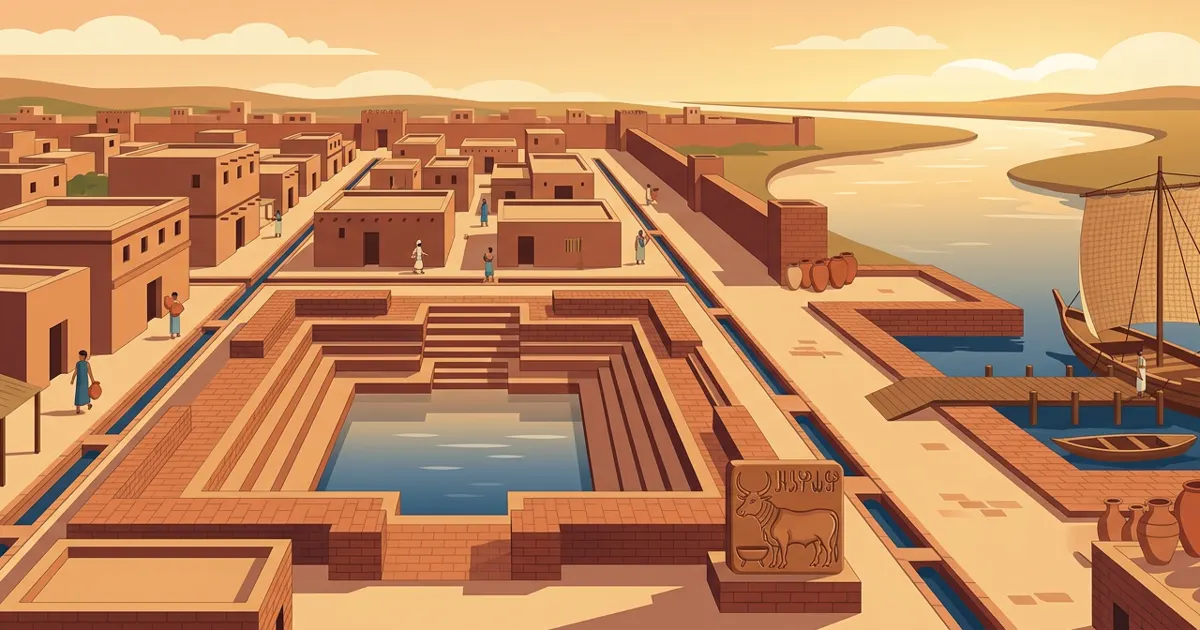
Indus Valley Civilization Sites: Quick Answer
The most asked Indus Valley (Harappan) sites are Harappa (on the Ravi, Pakistan Punjab, discovered by Daya Ram Sahni in 1921), Mohenjo-daro (on the Indus, Sindh, R.D. Banerji, 1922; Great Bath), Lothal (Gujarat; dockyard), Kalibangan (Rajasthan; ploughed field and fire altars), Dholavira (Gujarat; water reservoirs, UNESCO site since 2021), Chanhudaro (Sindh; bead factory), Banawali and Rakhigarhi (Haryana). Rakhigarhi is the largest Harappan site in India, and Mohenjo-daro is the largest overall among the well-known cities.
Key takeaway: For each site, remember river + present state/country + one unique finding. Add the four extreme sites (Manda north, Daimabad south, Alamgirpur east, Sutkagen Dor west) and the two discovery names (Daya Ram Sahni, R.D. Banerji), and most SSC questions on the Harappan civilization are covered.
Indus Valley Civilization: Basic Facts for SSC
| Point | Fact |
|---|---|
| Period | About 3300-1300 BCE overall; the mature Harappan phase was about 2600-1900 BCE |
| Age | Bronze Age (copper and bronze used; iron unknown) |
| Why "Harappan" | Harappa was the first site to be discovered (1921) |
| ASI Director-General at the time | Sir John Marshall |
| Script | Pictographic, written mostly right to left; not yet deciphered |
| Most common animal on seals | The one-horned "unicorn" bull |
| Seal material | Mostly steatite (soapstone) |
| Bricks | Burnt bricks of standard ratio 1:2:4 (thickness : width : length) |
| Town planning | Grid pattern, covered drains, citadel and lower town |
| Weights | Cubical stone weights in a binary system (1, 2, 4, 8, 16...; 16 was a key unit) |
| Foreign trade | With Mesopotamia, which called the Indus region Meluhha |
| Not known to Harappans | Iron, and (as a common domestic animal) the horse |
Indus Valley Civilization Sites List with River, State and Findings
| Site | River | Present location | Discovered / excavated by | Key findings |
|---|---|---|---|---|
| Harappa | Ravi | Sahiwal district, Punjab (Pakistan) | Daya Ram Sahni, 1921 | Rows of granaries, workmen's quarters, cemetery R-37, coffin burial, stone torso of a male figure |
| Mohenjo-daro | Indus | Larkana district, Sindh (Pakistan) | R.D. Banerji, 1922 | Great Bath, Great Granary, bronze dancing girl, steatite "priest-king" bust, Pashupati seal, assembly hall |
| Chanhudaro | Indus | Sindh (Pakistan) | N.G. Majumdar, 1931 | Bead-making factory, no citadel, ink-pot, footprints of a dog chasing a cat on a brick |
| Lothal | Bhogava (near the Sabarmati) | Ahmedabad district, Gujarat | S.R. Rao, 1955-57 | Dockyard, rice husk, fire altars, double (couple) burial, bead factory, terracotta ship model |
| Kalibangan | Ghaggar (ancient Saraswati) | Hanumangarh district, Rajasthan | Discovered by A. Ghosh (1953); excavated by B.B. Lal and B.K. Thapar | Ploughed field, fire altars, black bangles (the name means "black bangles"), earthquake evidence |
| Dholavira | Between the Manhar and Mansar streams, Khadir Bet island | Kutch district, Gujarat | J.P. Joshi (1967-68); excavated by R.S. Bisht (1990 onwards) | Water reservoirs and conservation system, a large signboard of Harappan letters, three-part city; UNESCO World Heritage Site (2021) |
| Rakhigarhi | Ghaggar-Drishadvati plain | Hisar district, Haryana | ASI excavations from 1997 | Largest Harappan site in India; skeletons used for ancient DNA study |
| Banawali | Ghaggar (ancient Saraswati) | Fatehabad district, Haryana | R.S. Bisht, 1974 | Toy plough, good-quality barley, radial streets |
| Ropar (Rupnagar) | Sutlej | Punjab (India) | Y.D. Sharma, 1953 | Dog buried with a human; first Harappan site excavated in independent India |
| Surkotada | — | Kutch district, Gujarat | J.P. Joshi, 1964 | Remains said to be of the horse (disputed), fortified settlement |
| Rangpur | Bhadar | Gujarat | Excavated by S.R. Rao | Rice husk, late Harappan phase |
| Alamgirpur | Hindon (Yamuna basin) | Meerut district, Uttar Pradesh | Y.D. Sharma, 1958 | Easternmost site; broken copper blade |
| Manda | Chenab | Jammu district, Jammu and Kashmir | J.P. Joshi | Northernmost site in India |
| Daimabad | Pravara (Godavari basin) | Ahmednagar district, Maharashtra | — | Southernmost site; bronze chariot with rider |
| Sutkagen Dor | Dasht | Balochistan (Pakistan) | Surveyed by Aurel Stein, 1927 | Westernmost site; trading post towards Iran |
| Kot Diji | Indus | Sindh (Pakistan) | F.A. Khan, 1955 | Pre-Harappan fortified settlement |
| Amri | Indus | Sindh (Pakistan) | N.G. Majumdar, 1929 | Pre-Harappan to Harappan transition |
| Shortugai | Amu Darya (Oxus) | Afghanistan | — | Trading colony; northernmost Harappan site overall |
| Bhirrana | Ghaggar | Fatehabad district, Haryana | ASI | Among the oldest Harappan-culture sites |
Indus Valley Civilization Extreme Sites (North, South, East, West)
| Direction | Site | River | Location |
|---|---|---|---|
| North (in India) | Manda | Chenab | Jammu and Kashmir |
| North (overall) | Shortugai | Amu Darya | Afghanistan |
| South | Daimabad | Pravara | Maharashtra |
| East | Alamgirpur | Hindon | Uttar Pradesh |
| West | Sutkagen Dor | Dasht | Balochistan, Pakistan |
Trick: "MADS" going round the compass from the top, Manda (north) → Alamgirpur (east) → Daimabad (south) → Sutkagen Dor (west).
Harappan Sites in India State-Wise
| State / UT | Sites |
|---|---|
| Gujarat | Lothal, Dholavira, Surkotada, Rangpur, Rojdi, Desalpur, Kuntasi |
| Haryana | Rakhigarhi, Banawali, Bhirrana, Kunal, Mitathal, Farmana |
| Rajasthan | Kalibangan |
| Punjab | Ropar (Rupnagar), Sanghol, Kotla Nihang Khan |
| Uttar Pradesh | Alamgirpur, Hulas |
| Jammu and Kashmir | Manda |
| Maharashtra | Daimabad |
Gujarat has the largest number of excavated Harappan sites in India.
Unique Findings of Harappan Sites (Most Asked Pairs)
| Finding | Site |
|---|---|
| Great Bath | Mohenjo-daro |
| Dockyard | Lothal |
| Ploughed field | Kalibangan |
| Bronze dancing girl | Mohenjo-daro |
| Priest-king (bearded man) bust | Mohenjo-daro |
| Pashupati (proto-Shiva) seal | Mohenjo-daro |
| Bead-making factory | Chanhudaro (also Lothal) |
| Water reservoirs, signboard | Dholavira |
| Toy plough, barley | Banawali |
| Rows of granaries, cemetery R-37 | Harappa |
| Bronze chariot | Daimabad |
| Dog buried with a man | Ropar |
| Rice husk | Lothal, Rangpur |
| Fire altars | Kalibangan, Lothal |
| Horse remains (disputed) | Surkotada |
Indus Valley Civilization Tricks to Remember
- Harappa = Ravi, Mohenjo = Indus: "Harappa Ravi" (HR) and "Mohenjo on Indus" (MI).
- Two discoverers in order: Harappa came first (1921, Daya Ram Sahni), Mohenjo-daro the next year (1922, R.D. Banerji): H before M in the alphabet, 21 before 22.
- Lothal = Lot of boats: the dockyard site.
- Kalibangan = Kali (black) bangles + ploughed field: farming in Rajasthan.
- Dholavira = Dhol (drum) of water: famous for water reservoirs and the signboard; Gujarat's UNESCO site of 2021.
- Chanhudaro = Chain of beads: the bead factory site with no citadel.
Indus Valley Civilization: PYQ-Style Practice Questions with Answers
1. Harappa is situated on the bank of which river? (a) Indus (b) Ravi (c) Sutlej (d) Ghaggar Answer: (b) Ravi. Mohenjo-daro is on the Indus.
2. The Great Bath was found at: (a) Harappa (b) Lothal (c) Mohenjo-daro (d) Kalibangan Answer: (c) Mohenjo-daro.
3. Which Harappan site had a dockyard? (a) Lothal (b) Dholavira (c) Ropar (d) Banawali Answer: (a) Lothal, in Gujarat.
4. Who discovered Harappa in 1921? (a) R.D. Banerji (b) John Marshall (c) Daya Ram Sahni (d) Mortimer Wheeler Answer: (c) Daya Ram Sahni. R.D. Banerji discovered Mohenjo-daro in 1922.
5. Evidence of a ploughed field was found at: (a) Kalibangan (b) Chanhudaro (c) Surkotada (d) Alamgirpur Answer: (a) Kalibangan, Rajasthan.
6. Which is the largest Harappan site in India? (a) Dholavira (b) Lothal (c) Rakhigarhi (d) Kalibangan Answer: (c) Rakhigarhi, in Hisar district, Haryana.
7. The easternmost site of the Indus Valley Civilization is: (a) Manda (b) Alamgirpur (c) Daimabad (d) Sutkagen Dor Answer: (b) Alamgirpur, on the Hindon in Uttar Pradesh.
8. The only Harappan city without a citadel is: (a) Chanhudaro (b) Harappa (c) Kalibangan (d) Lothal Answer: (a) Chanhudaro.
9. Which Harappan site was declared a UNESCO World Heritage Site in 2021? (a) Lothal (b) Rakhigarhi (c) Dholavira (d) Kalibangan Answer: (c) Dholavira, in Kutch, Gujarat.
10. The most common animal depicted on Harappan seals is the: (a) Elephant (b) Tiger (c) Unicorn (one-horned bull) (d) Rhinoceros Answer: (c) Unicorn.
11. The bronze "dancing girl" was found at: (a) Harappa (b) Mohenjo-daro (c) Lothal (d) Daimabad Answer: (b) Mohenjo-daro. The bronze chariot was found at Daimabad.
12. Which metal was NOT known to the Harappans? (a) Copper (b) Bronze (c) Gold (d) Iron Answer: (d) Iron.
Indus Valley Civilization Sites FAQs
Which was the first Indus Valley site to be discovered?
Harappa, discovered by Daya Ram Sahni in 1921. That is why the civilization is also called the Harappan civilization.
Which Harappan sites are in India?
The main ones are Lothal, Dholavira, Surkotada and Rangpur (Gujarat), Rakhigarhi, Banawali and Bhirrana (Haryana), Kalibangan (Rajasthan), Ropar (Punjab), Alamgirpur (Uttar Pradesh), Manda (Jammu and Kashmir) and Daimabad (Maharashtra).
Which is the largest site of the Indus Valley Civilization?
Mohenjo-daro is the largest of the classic cities. Recent work shows Rakhigarhi in Haryana is comparable in size, and it is the largest Harappan site in India.
Where is the Great Bath located?
At Mohenjo-daro, in Larkana district of Sindh, Pakistan.
Why did the Indus Valley Civilization decline?
Historians suggest several causes: drying and shifting of rivers (such as the Ghaggar-Hakra), floods, climate change and weaker trade. The old "Aryan invasion" theory is no longer accepted as the main cause.
Which Harappan site is known for water management?
Dholavira in Kutch, Gujarat, with its large stone-cut reservoirs and drains.
Practice Next
- History mock tests: SSC CGL History Mock Test 01, SSC CGL History Mock Test 02, SSC CHSL History Mock Test 01, RRB NTPC History Mock Test 01.
- Related notes: Gupta empire rulers list, Buddhist councils list, UNESCO World Heritage Sites in India, Indian rivers origin and end list, Important battles in Indian history.
- Exam updates: SSC CGL 2026, RRB NTPC 2026.
- Browse all study notes.