Agricultural Revolutions in India: Quick Answer
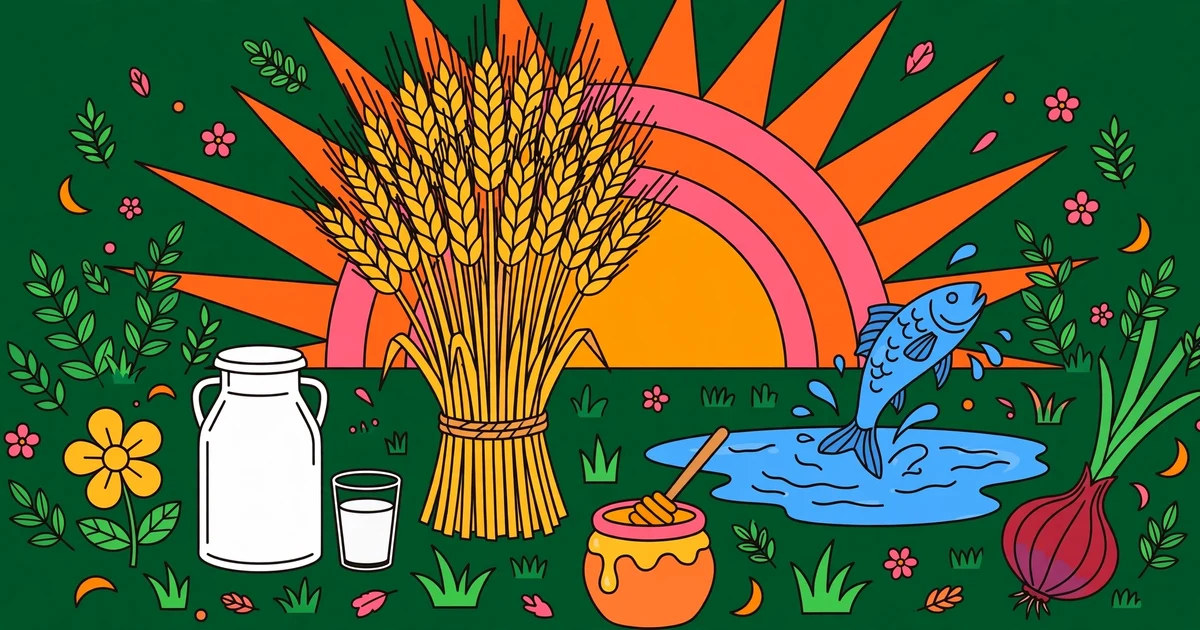
India's farm revolutions are named by colour, and SSC asks them as match-the-following almost every cycle. The Green Revolution (food grains, 1966–67) was led in India by M. S. Swaminathan, building on the high-yielding wheat varieties of Norman Borlaug; the White Revolution (milk, 1970–96) was Operation Flood under Verghese Kurien, which made India the world's largest milk producer — a position it still holds, with 247.87 million tonnes of milk in 2024–25, about 25% of world output. The other colours are Blue (fish, Arun Krishnan / Hiralal Chaudhuri), Yellow (oilseeds, Sam Pitroda, 1986–90), Golden (horticulture and honey, Nirpakh Tutej, 1991–2003), Pink (onion/prawn, Durgesh Patel), Silver (eggs/poultry, Indira Gandhi), Grey (fertilisers) and Round (potato). The exam trap in this topic is the Golden Revolution: different years' papers key it as horticulture and as honey — both answers are correct, and this note states both.
🔥 Key Exam Takeaway: The four you must never mix up are Green = food grains (Swaminathan, 1966–67), White = milk (Kurien, Operation Flood, 1970), Yellow = oilseeds (Sam Pitroda, 1986) and Golden = horticulture + honey (1991–2003). The colour→product mapping is the whole question in most papers — learn the table below by colour, not by father. All figures on this page are as of 17 November 2026.
The Complete List — Agricultural Revolutions in India
One table, in the order examiners usually list them. "Father" means the figure SSC answer keys credit; where two names circulate, both are given.
| # | Revolution | Product / Focus | Period | Father / Key Figure |
|---|---|---|---|---|
| 1 | Green Revolution (Harit Kranti) | Food grains — wheat and rice, HYV seeds | 1966–67 onwards | M. S. Swaminathan (India); Norman Borlaug (world) |
| 2 | White Revolution (Shwet Kranti) | Milk and dairy — Operation Flood | 1970–1996 | Verghese Kurien |
| 3 | Blue Revolution (Neel Kranti) | Fish and aquaculture | 1973–2002 | Dr. Arun Krishnan; Dr. Hiralal Chaudhuri also credited |
| 4 | Yellow Revolution (Peeli Kranti) | Oilseeds — mustard, sunflower, groundnut | 1986–1990 | Sam Pitroda |
| 5 | Golden Revolution (Swarn Kranti) | Horticulture — fruits and vegetables — AND honey | 1991–2003 | Nirpakh Tutej |
| 6 | Pink Revolution (Gulabi Kranti) | Onion, prawn and pharmaceuticals | 1970s | Durgesh Patel |
| 7 | Silver Revolution (Rajat Kranti) | Eggs and poultry | 2000s | Indira Gandhi |
| 8 | Grey Revolution (Dhusar Kranti) | Fertilisers | 1960s–1970s | — (no single father figure) |
| 9 | Round Revolution (Gol Kranti) | Potato | 1965–2005 | — (no single father figure) |
Three more revolutions appear in papers often enough to know by name. The Evergreen Revolution is sustainable agriculture — higher productivity without harming the environment — credited to M. S. Swaminathan. The Red Revolution is meat and tomato production (1980s, Vishal Tewari). The Golden Fibre Revolution is jute (1990s), and the Black Revolution is petroleum products. The Protein Revolution — higher production through a technology-driven second Green Revolution — was coined by Prime Minister Narendra Modi and Finance Minister Arun Jaitley in 2014. None of these four is in the main table because their "father" attributions are contested or they are slogans rather than programmes, but they are asked as one-markers.
The Green Revolution — 1966–67, Punjab, Haryana and Western UP
The Green Revolution began in India in 1966–67, in the middle of two drought years (1965 and 1966) when India was importing wheat under the American PL-480 programme and food security was a live political fear. Its core was the High Yielding Variety (HYV) programme: dwarf wheat varieties developed by Norman Borlaug in Mexico — Sonora 64 and Lerma Rojo — crossed with Indian varieties at the Indian Agricultural Research Institute, together with chemical fertilisers, pesticides and assured irrigation. The first HYV wheat was sown in Punjab, Haryana and Western Uttar Pradesh, the three regions with assured irrigation from canals and tubewells, and the package spread from wheat to rice (IR-8, the "miracle rice", from the International Rice Research Institute in the Philippines).
The Indian face of the revolution was M. S. Swaminathan, called the Father of the Green Revolution in India, who adapted Borlaug's varieties to Indian conditions and pushed the HYV package through the agricultural extension system. Borlaug, the Father of the Green Revolution in the world, won the Nobel Peace Prize in 1970 for the same work. The term "Green Revolution" itself was coined by William Gaud, the USAID administrator, in 1968. India moved from foodgrain imports to self-sufficiency within a few years, and the revolution's geography is itself an exam fact: it was not an all-India event in its first phase — it was concentrated in the north-west, and the eastern states joined much later, which is why its regional imbalance is still cited as its main criticism, alongside over-use of fertilisers and groundwater depletion.
The White Revolution — Operation Flood, 1970–1996
The White Revolution is the most successful of the colour revolutions by any measure. Operation Flood, launched by the National Dairy Development Board (NDDB) on 13 January 1970 under Verghese Kurien — the Father of the White Revolution and the "Milkman of India" — ran in three phases (Phase I 1970–80, Phase II 1981–85, Phase III 1985–96) and built a National Milk Grid linking village milk cooperatives on the Anand pattern to city consumers. It was the world's largest dairy development programme, financed in its first phase by selling skimmed milk powder and butter oil donated by the European Economic Community through the World Food Programme.
The numbers tell the story. Milk production rose from 17 million tonnes in 1950–51 to 247.87 million tonnes in 2024–25 — a rise of nearly 14.6 times (247.87 ÷ 17 ≈ 14.58). Per capita milk availability rose from 107 grams a day in 1970 to 459 grams a day in 2022–23, well above the world average of about 323 grams a day. India overtook the United States as the world's largest milk producer in 1998 and now produces about 25% of the world's milk. Operation Flood ended in 1996 after 26 years, but the cooperative structure it built — Amul, founded in 1946 by Tribhuvandas Patel, is the world's largest dairy cooperative — still carries the sector. The exam fact is the chain: 1970 → Kurien → Operation Flood → largest milk producer, 1998.
The Golden Revolution Trap — Horticulture AND Honey
The Golden Revolution (1991–2003) is the one colour where SSC papers disagree with each other — and both sides are right. The revolution covered horticulture (fruits, vegetables, flowers, spices) and honey production together: the 1991–2003 period saw a concerted push on horticultural crops and on beekeeping as a allied activity, and the standard answer key in most compilations reads "fruits, honey and horticulture". Its credited father is Nirpakh Tutej. The trap works like this: a 2018 paper keys "Golden Revolution — horticulture", a 2021 paper keys "Golden Revolution — honey", and a candidate who learned only one of them marks the other wrong. Learn it as a pair — horticulture and honey — and the trap disappears. The related Golden Fibre Revolution is different: that is jute, not honey, and it belongs to the 1990s as a separate label.
The other colours have smaller traps of their own. Blue has two fathers in circulation — Arun Krishnan is the name in most SSC keys, while Hiralal Chaudhuri is credited in fisheries literature for induced breeding of carps; learn Arun Krishnan first and Chaudhuri as the second name. Pink covers three things at once — onion, prawn and pharmaceuticals — and papers pick whichever one suits the options; Durgesh Patel is the credited figure. Silver (eggs/poultry, 2000s) is credited to Indira Gandhi, which surprises candidates who expect a scientist — it is a policy-era label, not a laboratory one. Grey (fertilisers, 1960s–70s) and Round (potato, 1965–2005) have no single father figure in the standard keys — any option naming one for these two is a distractor.
Records and Firsts
- First colour revolution: Green, 1966–67 — the only one of the nine that began in the 1960s as a food-security emergency.
- Longest-running: Round Revolution, 1965–2005 (40 years in the standard periodisation) — and White/Operation Flood, 26 years (1970–96) as a single programme.
- Largest outcome: White — India is the world's largest milk producer since 1998, about 25% of world output, 247.87 million tonnes in 2024–25.
- Nobel connection: Norman Borlaug (Green, world father) won the Nobel Peace Prize in 1970 — the only Nobel laureate among the fathers.
- Two fathers, one colour: Blue — Arun Krishnan and Hiralal Chaudhuri are both credited; Green — Swaminathan (India) and Borlaug (world).
- No father at all: Grey (fertilisers) and Round (potato) have no credited father figure.
- Term coined: "Green Revolution" was coined by William Gaud in 1968, two years after the programme began.
- Oldest institution behind a revolution: Amul (1946) predates the White Revolution (1970) by 24 years — the cooperative model came first, the national programme second.
Common Mistakes
- Answering "Golden = honey" only, or "Golden = horticulture" only. Both are keyed in different years' papers. The safe answer is "horticulture (fruits and vegetables) and honey".
- Calling Swaminathan the father of the Green Revolution in the world. He is the father in India; the world father is Norman Borlaug. Papers test exactly this split.
- Dating the White Revolution to 1965. The NDDB was founded in 1965, but Operation Flood launched on 13 January 1970. 1965 is the institution, 1970 is the programme.
- Saying India became the largest milk producer in 1970. Operation Flood started in 1970; India overtook the United States only in 1998 — 28 years later.
- Mixing up Yellow and Golden. Yellow = oilseeds (Sam Pitroda, 1986–90, Technology Mission on Oilseeds). Golden = horticulture and honey (1991–2003). The years are adjacent, which is the trap.
- Crediting Kurien with the Green Revolution. Kurien is White (milk). Swaminathan is Green (food grains). The two names are the commonest swap in match-the-following.
- Saying the Green Revolution covered all of India at once. Its first phase was Punjab, Haryana and Western UP only — assured-irrigation districts. The east joined later.
- Answering "Blue = blue revolution is about water". Blue is fish and aquaculture, not irrigation or drinking water.
- Inventing a father for Grey or Round. Neither has a credited father figure in the standard keys. "M. S. Swaminathan" as the Grey Revolution's father appears in one compilation, but the mainstream SSC keys leave both blank — do not pick a name for them.
- Confusing Golden Fibre with Golden. Golden Fibre = jute. Golden = horticulture and honey. Different products, different labels.
Memory Tricks
- "Green grows grain, White flows milk": the two biggest revolutions rhyme their products — green fields, white milk.
- Colours in rainbow order by period: Round (1965) → Green (1966) → Grey (1960s) → White/Pink (1970) → Blue (1973) → Yellow (1986) → Golden (1991) → Silver (2000s). The colours run roughly in time order.
- "Pitroda pressed the oil": Sam Pitroda — Yellow — oilseeds. The alliteration (P–Y–O) is the hook.
- Kurien = curd: Kurien sounds like curd — milk, White Revolution, Operation Flood.
- Golden = two golds: horticulture (golden fruits) and honey (golden jars) — one colour, two products, by design.
- "Blue fish swim, Grey fertiliser stays": Blue moves (fish), Grey stays (fertiliser on the field) — and neither Grey nor Round has a father to remember.
Practice Questions
Q1. Who is known as the Father of the Green Revolution in India, and who is the father in the world? A: M. S. Swaminathan in India; Norman Borlaug in the world. Borlaug won the Nobel Peace Prize in 1970.
Q2. In which year did the Green Revolution begin in India, and in which states first? A: 1966–67, first in Punjab, Haryana and Western Uttar Pradesh, using high-yielding varieties of wheat with fertilisers and assured irrigation.
Q3. What was Operation Flood, and who led it? A: Operation Flood was the NDDB's dairy programme (launched 13 January 1970, run in three phases to 1996) behind the White Revolution, led by Verghese Kurien. It built the National Milk Grid of Anand-pattern cooperatives.
Q4. Since when has India been the world's largest milk producer, and how much milk did it produce in 2024–25? A: Since 1998, when it overtook the United States. Production was 247.87 million tonnes in 2024–25, about 25% of world output.
Q5. What does the Golden Revolution relate to — and why is it an exam trap? A: Horticulture (fruits and vegetables) AND honey, 1991–2003, father Nirpakh Tutej. Different years' papers key it as horticulture and as honey, so both answers are correct — learn the pair.
Q6. Match: Yellow Revolution — product and father. A: Oilseeds (mustard, sunflower, groundnut), 1986–90, father Sam Pitroda, under the Technology Mission on Oilseeds.
Q7. Who is credited as the father of the Blue Revolution? A: Dr. Arun Krishnan in most SSC answer keys; Dr. Hiralal Chaudhuri is also credited in fisheries literature for induced carp breeding.
Q8. Which two revolutions have no single father figure? A: Grey (fertilisers) and Round (potato). Any option naming a father for these two is a distractor.
Q9. What is the Pink Revolution, and who is its credited figure? A: Onion, prawn and pharmaceuticals production, 1970s, credited to Durgesh Patel.
Q10. How much did milk production rise between 1950–51 and 2024–25? A: From 17 million tonnes to 247.87 million tonnes — about 14.6 times. Per capita availability rose from 107 grams a day (1970) to 459 grams a day (2022–23).
Frequently Asked Questions
Q1. What is the Green Revolution in India? The 1966–67 programme that raised food-grain output with high-yielding wheat and rice varieties, fertilisers and irrigation, first in Punjab, Haryana and Western UP. M. S. Swaminathan is its father in India; Norman Borlaug is the world father.
Q2. Which revolution made India the world's largest milk producer? The White Revolution — Operation Flood (1970–96) under Verghese Kurien. India overtook the United States in 1998 and still leads, with about 25% of world milk output.
Q3. What is the Golden Revolution related to? Horticulture (fruits and vegetables) and honey, 1991–2003, father Nirpakh Tutej. Both horticulture and honey are keyed as correct answers in different papers — learn both.
Q4. Who is the father of the Yellow Revolution? Sam Pitroda — oilseeds, 1986–90, under the Technology Mission on Oilseeds.
Q5. What is the Blue Revolution? Fish and aquaculture, 1973–2002. Arun Krishnan is the name in most SSC keys; Hiralal Chaudhuri is also credited.
Q6. Which agricultural revolutions have no father figure? Grey (fertilisers) and Round (potato). The standard keys leave both blank.
Q7. What is the Evergreen Revolution? Sustainable agriculture — raising productivity without harming the environment — credited to M. S. Swaminathan. It is a later concept, distinct from the 1966–67 Green Revolution.
Practice Next
- Top crop states: Top Crop Producing States in India: Rice, Wheat, Sugarcane, Cotton, Tea, Coffee and More (2026)
- River valley projects: Major River Valley Projects of India: Complete List with River, State and Purpose
- Solar parks: Solar Parks in India: Complete List with Capacity, State and Operator (2026)
- Government schemes: Important Government Schemes in India List
- More free notes: All Study Notes
Sources: Agricultural revolutions table — products, periods and fathers (Testbook "List of Important Revolutions in India"; Jagran Josh "List of Agricultural Revolutions in India", 25 Jan 2026; CareerIndia; Testbook "What is the Golden Revolution related to?" — Golden 1991–2003, Nirpakh Tutej, fruits/honey/horticulture); White Revolution / Operation Flood launched 13 January 1970, three phases to 1996, India largest milk producer since 1998, ~22–25% of world output (Wikipedia, "White revolution (India)"/"Operation Flood"); milk production 247.87 million tonnes in 2024–25, up 3.58% from 239.30 million tonnes in 2023–24, ~25% of global output; per capita availability 107 g/day (1970) to 459 g/day (2022–23) vs world average ~323 g/day (NDDB via DigitallyLearn/Gender.Study); milk 17 MT in 1950–51 (Legacy IAS). As of 17 November 2026.