Mughal Emperors List: The Six Great Mughals
The Mughal Empire ran from 1526 (First Battle of Panipat) to 1857 (exile of Bahadur Shah Zafar). Exams ask the order, the battles and the monuments, and most questions come from the first six rulers.
Key takeaway (trick "BHAJSA"): Babur → Humayun → Akbar → Jahangir → Shah Jahan → Aurangzeb. Founder = Babur (1526). Greatest = Akbar. Taj Mahal = Shah Jahan. Last = Bahadur Shah II (Zafar), exiled to Rangoon after 1857.
Mughal Emperors List in Order with Years
| # | Emperor | Reign | Remember for |
|---|---|---|---|
| 1 | Babur | 1526-1530 | Founder; First Battle of Panipat (1526) over Ibrahim Lodi; Khanwa (1527) over Rana Sanga; Baburnama (Turki) |
| 2 | Humayun | 1530-1540, 1555-1556 | Lost to Sher Shah at Chausa (1539) and Kannauj (1540); regained Delhi 1555; died falling from library stairs (Sher Mandal) |
| - | Sur interregnum: Sher Shah Suri | 1540-1545 | Rupiya coin; Grand Trunk Road (Sadak-e-Azam) improved; land revenue reforms |
| 3 | Akbar | 1556-1605 | Second Panipat (1556) over Hemu; Haldighati (1576); abolished jizya (1564); Din-i-Ilahi (1582); Mansabdari; Fatehpur Sikri, Buland Darwaza |
| 4 | Jahangir | 1605-1627 | Chain of Justice; Captain Hawkins and Sir Thomas Roe (1615) at his court; Tuzuk-i-Jahangiri |
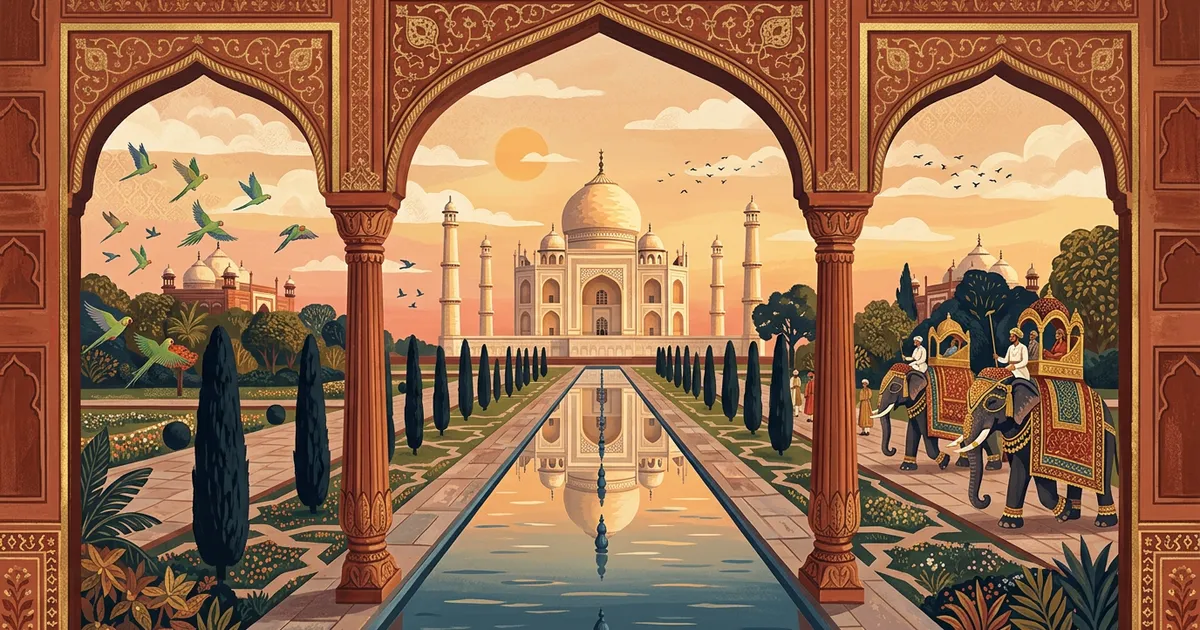
| 5 | Shah Jahan | 1628-1658 | Taj Mahal, Red Fort Delhi, Jama Masjid Delhi; Peacock Throne; capital Shahjahanabad |
| 6 | Aurangzeb (Alamgir) | 1658-1707 | Reimposed jizya (1679); Deccan wars; Bibi ka Maqbara (built by his son Azam Shah) |
Later Mughals (1707-1857)
| Emperor | Reign | Remember for |
|---|---|---|
| Bahadur Shah I | 1707-1712 | First of the later Mughals |
| Jahandar Shah | 1712-1713 | Brief reign |
| Farrukhsiyar | 1713-1719 | Farman of 1717 giving the East India Company duty-free trade in Bengal; Sayyid brothers |
| Rafi-ud-Darajat, Shah Jahan II | 1719 | Puppets of the Sayyid brothers |
| Muhammad Shah ("Rangeela") | 1719-1748 | Nadir Shah's invasion (1739) took the Peacock Throne and Koh-i-Noor |
| Ahmad Shah Bahadur | 1748-1754 | Ahmad Shah Abdali's raids |
| Alamgir II | 1754-1759 | Battle of Plassey (1757) during his reign |
| Shah Alam II | 1759-1806 | Battle of Buxar (1764); Treaty of Allahabad (1765) gave the Company Diwani of Bengal, Bihar, Odisha |
| Akbar II | 1806-1837 | Gave Ram Mohan Roy the title "Raja" and sent him to England |
| Bahadur Shah II (Zafar) | 1837-1857 | Last Mughal; leader of the 1857 revolt at Delhi; exiled to Rangoon (died 1862) |
Mughal Battles Table
| Battle | Year | Between | Winner |
|---|---|---|---|
| First Battle of Panipat | 1526 | Babur vs Ibrahim Lodi | Babur |
| Khanwa | 1527 | Babur vs Rana Sanga | Babur |
| Chanderi | 1528 | Babur vs Medini Rai | Babur |
| Ghaghra | 1529 | Babur vs Afghans | Babur |
| Chausa | 1539 | Humayun vs Sher Shah | Sher Shah |
| Kannauj (Bilgram) | 1540 | Humayun vs Sher Shah | Sher Shah |
| Second Battle of Panipat | 1556 | Akbar (Bairam Khan) vs Hemu | Akbar |
| Haldighati | 1576 | Akbar's army (Man Singh) vs Maharana Pratap | Mughals |
Mughal Books and Monuments (Who Wrote / Built What)
| Work | Author / builder |
|---|---|
| Baburnama (Tuzuk-i-Baburi) | Babur (in Turki) |
| Humayun-nama | Gulbadan Begum (Babur's daughter) |
| Akbarnama, Ain-i-Akbari | Abul Fazl |
| Tuzuk-i-Jahangiri | Jahangir |
| Humayun's Tomb, Delhi | Built by his widow Bega Begum (Haji Begum) under Akbar |
| Buland Darwaza, Fatehpur Sikri | Akbar (Gujarat victory) |
| Taj Mahal, Agra | Shah Jahan (for Mumtaz Mahal) |
| Red Fort and Jama Masjid, Delhi | Shah Jahan |
| Bibi ka Maqbara, Aurangabad | Azam Shah (Aurangzeb's son) for his mother |
Several of these are UNESCO sites; see our UNESCO World Heritage Sites in India 2026 list.
Trick to Remember the Mughal Emperors in Order
- Great Mughals: "BHAJSA" - Babur, Humayun, Akbar, Jahangir, Shah Jahan, Aurangzeb.
- Later Mughals: "B J F R S M A A S A B" - read as "Big Jokers Fight, Rafi Shah Mourns, Ahmad Alamgir Shah Akbar Bahadur": Bahadur Shah I, Jahandar, Farrukhsiyar, Rafi-ud-Darajat, Shah Jahan II, Muhammad Shah, Ahmad Shah, Alamgir II, Shah Alam II, Akbar II, Bahadur Shah II.
- Two Panipats, 30 years apart: 1526 (Babur) and 1556 (Akbar). The third (1761) was Marathas vs Ahmad Shah Abdali, not a Mughal battle.
Common Mistakes
- Calling Humayun's tomb a work of Humayun. It was built after his death by his widow.
- Giving Aurangzeb for the Bibi ka Maqbara. It was built by his son Azam Shah.
- Saying Akbar abolished jizya in 1579. The standard answer is 1564.
- Making Sher Shah a Mughal. He was an Afghan (Sur dynasty) who broke Mughal rule from 1540 to 1555.
Mughal Emperors Questions with Answers
- Who founded the Mughal Empire? Answer: Babur (1526).
- The First Battle of Panipat was fought between? Answer: Babur and Ibrahim Lodi (1526).
- Who wrote the Akbarnama? Answer: Abul Fazl.
- Din-i-Ilahi was started by? Answer: Akbar (1582).
- Sir Thomas Roe visited whose court? Answer: Jahangir's.
- Who built the Red Fort in Delhi? Answer: Shah Jahan.
- Who reimposed the jizya in 1679? Answer: Aurangzeb.
- Nadir Shah invaded India during whose reign? Answer: Muhammad Shah (1739).
- The Treaty of Allahabad (1765) was signed by which Mughal emperor? Answer: Shah Alam II.
- Who was the last Mughal emperor? Answer: Bahadur Shah II (Zafar).
Practise in the SSC CGL General Awareness Sectional Mock Test 03 and SSC CHSL General Awareness Sectional Mock Test 02.
Mughal Emperors FAQs
What is the correct order of the Mughal emperors?
Babur, Humayun, Akbar, Jahangir, Shah Jahan and Aurangzeb (remember BHAJSA), followed by the later Mughals up to Bahadur Shah II.
Who was the greatest Mughal emperor?
Akbar (1556-1605) is usually called the greatest, for his administration (Mansabdari), religious tolerance and expansion.
Who was the last Mughal emperor?
Bahadur Shah II (Zafar), who led the 1857 revolt in Delhi and was exiled to Rangoon by the British.
Practice Next
- New SSC CGL practice: SSC CGL History Mock Test 01.
- Mock tests: SSC CGL General Awareness Sectional Mock Test 03, SSC CGL General Awareness Sectional Mock Test 01 and SSC CHSL General Awareness Sectional Mock Test 02.
- Related notes: Maratha Empire and Peshwas list, Governor General of India list, UNESCO World Heritage Sites in India 2026, classical dances of India and their states (Kathak's Mughal court influence) and Indian rivers origin and end list.
- Exam details: SSC CGL 2026.
- Browse all study notes.